

If you can’t beat the heat — may as well join it! That’s just what we did last weekend when we brought home bags full of fresh hatch chiles from Central Market. We sampled so many food items with hatch chiles in them that we didn’t even need lunch that day. We brought home fresh hatch chiles, roasted hatch, hatch salsa, artisan goat cheese spread with hatch, hatch guacamole and last but not least, hatch brownies.
The hatch brownies were great, sweet and dense with a little nip of hot and spicy. The guac disappeared in a flash and I’ve used the roasted chiles in this salsa, in omelets and in a cornbread dish, which you are likely to read about in a future post. Can you tell, we really enjoy hatch chiles?
Did you know that hatch chiles come from Hatch, New Mexico?
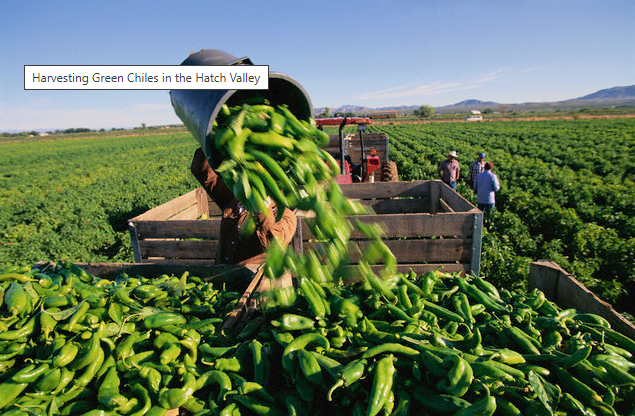
A small town between Las Cruces and Truth or Consequences , in the Mesilla Valley in the southwestern half of New Mexico. Over Labor Day every year this small town hosts a “Hatch Chile Festival” complete with the crowning of a Hatch Chile Queen. On their festival web site I found these facts about chiles you might also find interesting.
Chile Facts & Recipes
Warning
Chile must be kept very cool and wet, preferably on ice while being transported. Chile should be frozen immediately. Chile will spoil very quickly (within a couple of days) if it is not kept properly. A cooler with ice is the best way to transport chile.
- One fresh medium-sized green chile pod has as much Vitamin C as six oranges.
- One teaspoon of dried red chile powder has the daily requirements of Vitamin A.
- Hot chile peppers burn calories by triggering a thermodynamic burn in the body, which speeds up the metabolism.
- Teas & lozenges are made with chile peppers for the treatment of a sore throat.
- Capsaicinoids, the chemical that make chile peppers hot, are used in muscle patches for sore and aching muscles.
- Chile peppers are relatives of tomatoes, potatoes, and eggplants, all belonging to the nightshade family.
- The color extracted from very red chile pepper pods, oleoresin, is used in everything from lipstick to processed meats.
- There are 26 known species of chile pepper, five of which are domesticated.
- Adapted from the New Mexico Chile Institutes’ “Chile Pepper Facts”
It’s great that these chiles can be roasted and frozen until needed. I’ve put off doing just that as I can’t seem to drag myself out into the 105* temperature to roast chiles. Right after I post this summery salsa recipe for you I plan on doing just that – dragging myself out into the heat to fire up the grill. It will be worth it to have a freezer full of fresh roasted hatch for fall and winter menus and maybe I’ll try my hand at some of those hatch brownies.
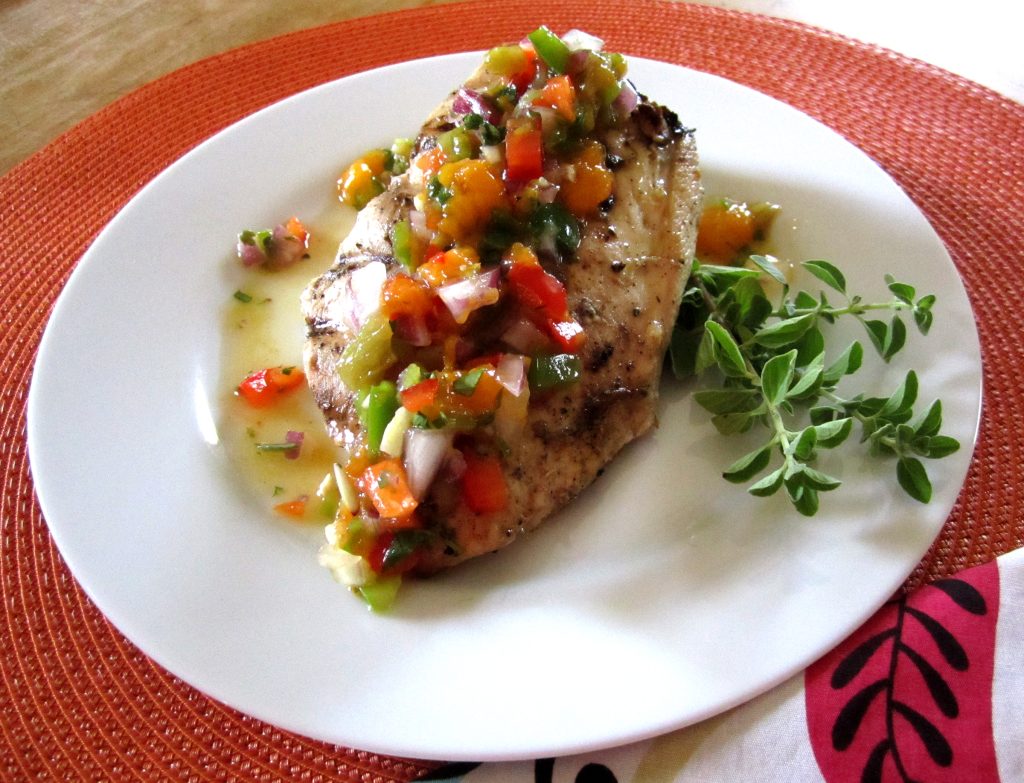
I threw this salsa together using peaches I’d frozen from my own trees. I find that my own fresh frozen peaches taste sweeter and are juicer than any I can find in our local groceries. This salsa is a delicious accompaniment to grilled chicken or fish or eaten as a snack with chips. I even like it spooned over a scoop of cottage cheese for a healthy mid-morning snack or lunch.
Enjoy!
Peach-Hatch Salsa
Ingredients:
4 peaches, diced
1 red bell pepper, seeded and diced
1 green bell pepper, seeded and diced
1 red onion, diced
1 Tbsp. minced garlic
2 Hatch chiles, roasted, peeled, seeded and diced
1/2 cup orange juice
1/4 cup fresh squeezed lime juice
1/2 cup fresh cilantro, chopped
2 Tbsp. guava jelly
salt and pepper to taste
In a large bowl combine all ingredients and mix well. Cover and chill for one hour or overnight.


Leave a Reply to The Orange Bee Cancel reply